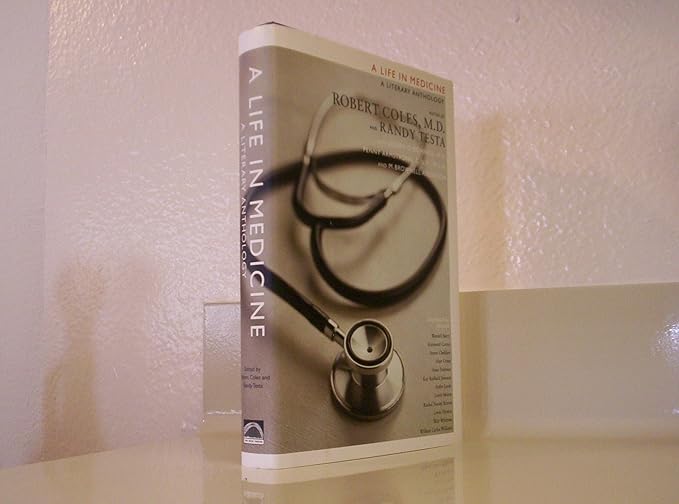
From Library JournalThis compilation of essays, poems, short stories, memoirs, and a play excerpt, edited by child psychiatrist Coles (Harvard Medical Sch.; Spiritual Life of Children) and literature and ethics professor Testa (Harvard and Dartmouth), reflects on the human side of medicine. The book includes pieces by famous writers (Raymond Carver, Hart Crane, Anton Chekhov, Mikhail Bulgakov, William Carlos Williams, etc.) as well as by the lesser known, most of whom are surgeons, psychiatrists, nurses, and midwives. The book is divided into four sections, with each part focusing on a particular quality that a physician must have (altruism, knowledge, skill, and a sense of duty). All of the selections reflect a concern for the human aspects of medicine and espouse the rights of the patient over the rigidity of the medical establishment. This anthology will be most useful for colleges that have medical ethics courses; the general reader will likely be less interested in such readings, excellent though they are. Recommended primarily for university libraries that support medical curricula. Morris Hounion, New York City Technical Coll. Lib., Brooklyn Copyright 2002 Cahners Business Information, Inc.From The New England Journal of MedicineIn their introduction to this anthology of short literary works showing facets of life in medical care, Coles and Testa reflect fears that our medical schools are still not adequately preparing students to "understand and connect [with patients in] heart, mind, and soul." The editors and their three collaborators assembled the anthology with the hope that it might offer readers in the health care professions a fresh perspective on their responses to those they care for each day. The 53 selections are grouped according to four attributes: altruism, knowledge, skill, and duty. These attributes have been specified by the Medical School Objectives Project of the Association of American Medical Colleges as those needed by medical graduates when they enter the world of medicine. Some of the selections are essays; some are poems; and some are very short stories. Some of the authors are widely known -- Anton Chekhov, Walt Whitman, and William Carlos Williams, for example. Some are known mainly within medicine -- Eric J. Cassell, Lewis Thomas, John Stone, and Abraham Verghese. Some are probably known only to their immediate colleagues. The short introduction to each selection defines its place in literature and tells us something about its author. The title of the book, A Life in Medicine, suggests that it is a biography or autobiography. It would have been more informatively cast as Lives in and around Medicine. The voices from those lives differ widely in their identities. Yes, some are the voices of persons directly involved in medicine: a medical student, a nurse, a physician, a resident. Others are the voices of persons whose lives touch medicine in some way: a patient, the family of a patient, a social observer. All t