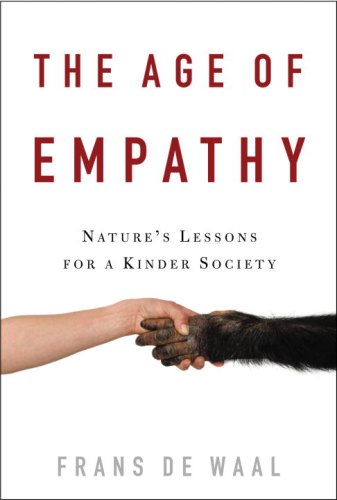
Review“As nature writers go, de Waal is among the most accomplished. . . . an excellent tour guide, refreshingly literate outside his field, deft at stitching bits of philosophy and anthropology into the narrative. He is also pleasingly opinionated.”- Globe and Mail"Freshly topical . . . . a corrective to the idea that all animals - human and otherwise - are selfish and unfeeling to the core."- The Economist "The lessons of the economic meltdown, Hurricane Katrina, and other disasters may not be what you think: Biologically, humans are not selfish animals. For that matter, neither are animals, writes the engaging Frans de Waal … The Age of Empathy offers advice to cutthroat so-called realists: Listen to your inner ape."- O, The Oprah Magazine“An important and timely message about the biological roots of human kindness.” - Desmond Morris, author of The Naked Ape"[De Waal] culls an astounding volume of research…. fascinating."- Publishers Weekly "An appealing celebration of our better nature."- Kirkus Reviews"Magnetic reading.”- BooklistAbout the AuthorFrans de Waal is a world-renowned primatologist based in Atlanta, Georgia. Winner of the Los Angeles Times Book Award, he has written eight books and his work has been translated into fourteen languages. In 2007, Time magazine called him one of the 100 World’s Most Influential People. Excerpt. © Reprinted by permission. All rights reserved. 1Biology, Left and RightWhat is government itself but the greatest of all reflections on human nature?-James M adison, 1788 Are we our brothers' keepers? Should we be? Or would this role only interfere with why we are on earth, which according to economists is to consume and produce, and according to biologists is to survive and reproduce? That both views sound similar is logical given that they arose at around the same time, in the same place, during the English Industrial Revolution. Both follow a competition-is-good-for-you logic. Slightly earlier and slightly to the north, in Scotland, the thinking was different. The father of economics, Adam Smith, understood as no other that the pursuit of self-interest needs to be tempered by "fellow feeling." He said so in The Theory of Moral Sentiments, a book not nearly as popular as his later work The Wealth of Nations. He famously opened his first book with: How selfish soever man may be supposed, there are evidently some principles in his nature, which interest him in the fortune of others, and render their happiness necessary to him, though he derives nothing from it except the pleasure of seeing it. The French revolutionaries chanted of fraternité, Abraham Lincoln appealed to the bonds of sympathy, and Theodore Roosevelt spoke glowingly of fellow feeling as "the most important factor in producing a healthy political and social life." But if this is true, why is this sentiment sometimes ridiculed as being, well, sentimental? A recent example occurred after Hurricane Katrin