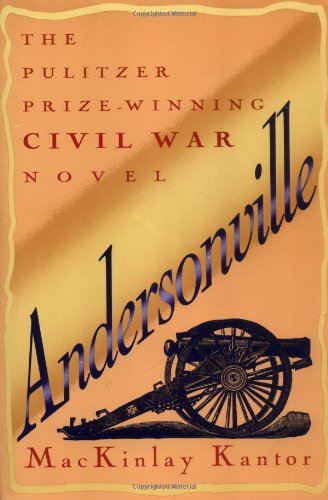
Review“The greatest of our Civil War novels.” -The New York Times“No one who reads it will ever forget.” -Christian Science Monitor“A heartfelt novel...written with truth and power.” -Atlantic Monthly“The best Civil War novel I have ever read, without question.” -Bruce Catton, Pulitzer Prize-winning historian, Chicago Tribune“Will give Civil War buffs their greatest hour since Gone With the Wind.” -Time“A great book, perhaps the greatest of all Civil War novels.” -Chicago Sun-TimesAbout the AuthorMACKINLAY KANTOR (1904-1977) was the distinguished author of more than thirty books and numerous screenplays. Excerpt. © Reprinted by permission. All rights reserved. I Sometimes there was a compulsion which drew Ira Claffey from his plantation and sent him to walk the forest. It came upon him at eight o’clock on this morning of October twenty-third; he responded, he yielded, he climbed over the snake fence at the boundary of his sweet potato field and went away among the pines.Ira Claffey had employed no overseer since the first year of the war, and had risen early this morning to direct his hands in the potato patch. Nowadays there were only seven and one-half hands on the place, house and field, out of a total Negro population of twelve souls; the other four were an infant at the breast and three capering children of shirt-tail size.Jem and Coffee he ordered to the digging, and made certain that they were thorough in turning up the harvest and yet gentle in lifting the potatoes. Nothing annoyed Ira Claffey like storing a good thirty-five bushels in a single mound and then losing half of them through speedy decay.In such a manner, he thought, have some of our best elements and institutions perished. One bruise, one carelessness, and rot begins. Decay is a secret but hastening act in darkness; then one opens up the pine bark and pine straw-or shall we say, the Senate?-and observes a visible wastage and smell, a wet and horrid mouldering of the potatoes. Or shall we say, of the men?In pursuit of his own husbandry on this day, Ira carried a budding knife in his belt. While musing in bed the night before, he had been touched with ambition: he would bud a George the Fourth peach upon a Duane’s Purple plum.Veronica was not yet asleep, but reading her Bible by candlelight beside him. He told her about it.But, Ira, does not the Duane’s Purple ripen too soon? Aren’t those the trees just on the other side of the magnolias?No, no, my dear. Those are Prince’s Yellow Gage. The Duane’s Purple matures in keeping with the George Fourths. I’d warrant you about the second week of July. Say about the tenth. I should love to see that skin. Such a fine red cheek on the George Fourths, and maybe dotted with that lilac bloom and yellow specks-But she was not hearing him, she was weeping. He turned to watch her; he sighed, he put out one big hand and touched the thick gray-yellow braid which weighted on her white-f