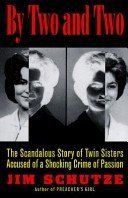
From Library JournalBetty Wilson and her twin sister, Peggy, were charged in 1993 with conspiring to kill Betty's husband. Two juries, hearing one set of facts, found Betty guilty and acquitted Peggy. Unlike Ken Englade's account of the same case, Blood Sister (St. Martin's, 1994), this volume concludes that both women are innocent and that the drunken, drugged James Dennison White was solely responsible for the murder. Throughout, Schutze points out inconsistencies, errors, lies, etc., in the case. What is perhaps even more ghastly than the the murder is the possibility that politics, corruption, sex, and race may have affected the outcome of a trial that focused more on Betty Wilson's faults than on the evidence. A well-organized, crisp, and fast-moving account; for popular true crime collections.?Christine Moesch, Buffalo & Erie Cty. P.L., N.Y.Copyright 1995 Reed Business Information, Inc.From BooklistIt is certainly not unheard of for a woman to pay someone to kill her husband, and that's what Betty Wilson was convicted of in 1993. After investigating the case, however, crime reporter Schutze became convinced that the Alabama native was wrongly convicted. Betty's husband Jack, a prominent Huntsville ophthalmologist, was brutally murdered in his home by "white trash rodent" James White. White often worked as a handyman for Betty's twin sister (who was acquitted of involvement in the murder), and although no evidence indicates he ever met Betty, the alcoholic murderer claims he was paid to kill Jack. Because Betty was a flamboyant recovering alcoholic and an occasionally unfaithful wife, police eagerly accepted White's claims. Schutze provides a vivid, albeit one-sided, account of a murder case that received national media attention. Sue-Ellen Beauregard