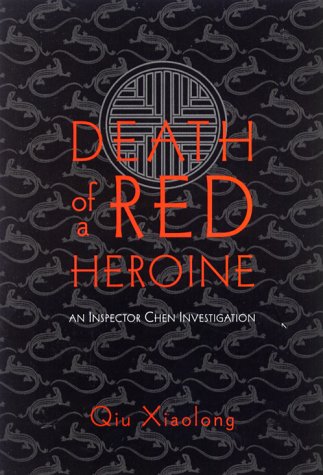
Amazon.com ReviewBy any standard, Inspector Chen Cao is a novelty in the world of police procedurals. A published poet and translator of American and English mystery novels, he has been assigned by the Chinese government, under Deng Xiaoping's cadre policy, to a "productive" job with the Special Cases Bureau of the Shanghai Police Department. Shanghai in the mid-1990s is a city caught between reverence for the past and fascination with a tantalizing, market-driven present. When the body of a young "national model worker," revered for her adherence to the principles of the Communist Party, turns up in a canal, Chen is thrown into the midst of these opposing forces. As he struggles to unravel the hidden threads of this paragon's life, he finds himself challenging the very political forces that have guided his life since birth. With party-line-spouting superiors above him and detectives who resent his quick promotion beneath him, Chen finds himself wondering whether justice is a concept at all meaningful in late-20th-century China. Shanghai in the mid-1990s is a city caught between reverence for the past and fascination with a tantalizing, market-driven present. When the body of a young "national model worker," revered for her adherence to the principles of the Communist Party, turns up in a canal, Chen is thrown into the midst of these opposing forces. As he struggles to unravel the hidden threads of this paragon's life, he finds himself challenging the very political forces that have guided his life since birth. With party-line-spouting superiors above him and detectives who resent his quick promotion beneath him, Chen finds himself wondering whether justice is a concept at all meaningful in late-20th-century China.Death of a Red Heroine is a book hovering uneasily between the spheres of fiction and fact, creativity and didacticism. For much of the novel, author Qiu Xiaolong seems more intent on driving home the actions and consequences of the Cultural Revolution and its aftermath than on the slowly unfolding plot. Tedious repetitions of the fates, under Mao, of "educated youths" joust with both the actions of the detectives and Chen's "poetic" ruminations, which, unfortunately, are infected by precisely the stiffness and arbitrariness Qiu is at pains to decry in his historical passages. The moving couplets Chen favors are potentially fascinating insights into the interaction between ancient and modern China, but instead of provoking the reader into reflection, Qiu offers reductive explanations of each and every poem. Death of a Red Heroine is a book hovering uneasily between the spheres of fiction and fact, creativity and didacticism. For much of the novel, author Qiu Xiaolong seems more intent on driving home the actions and consequences of the Cultural Revolution and its aftermath than on the slowly unfolding plot. Tedious repetitions of the fates, under Mao, of "educated youths" joust with both the actions of the detectives and Chen's "poetic"