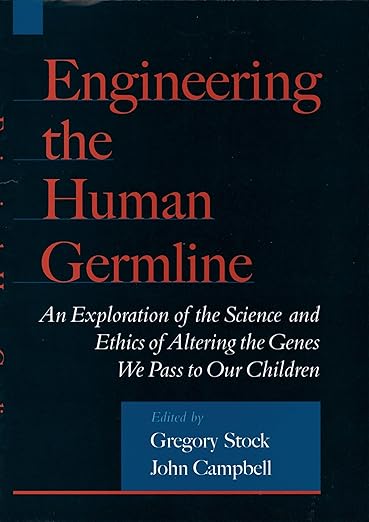
From The New England Journal of MedicineLet's dispense with the suspense. This is a short, readable, thought-provoking book that discusses in nontechnical terms the future of humankind in the age of genetic engineering and should be read by anyone who wishes to participate in a public discourse that will shape the future. The central topic is the technology of genetically altering germ-line cells. Altering germ-line cells, which produce ova and spermatozoa, is considerably different from altering somatic cells. Germ-line changes will affect every cell in the body and will be passed on to future generations, whereas somatic-cell changes affect only specific cells within a given organ system and are not passed on. It is interesting to see the shift in opinion within the scientific community, which previously discounted germ-line therapy, eugenics, and cloning as unachievable and morally suspect. With familiarity, increased understanding, and discussion, many now see these forms of technology as inevitable, and most of the contributors to this book are willing to consider them and some even to defend them. It is interesting to see the shift in opinion within the scientific community, which previously discounted germ-line therapy, eugenics, and cloning as unachievable and morally suspect. With familiarity, increased understanding, and discussion, many now see these forms of technology as inevitable, and most of the contributors to this book are willing to consider them and some even to defend them. Germ-line engineering, by providing a means for humans to control and direct the evolution of their species, is another blow to the fading credibility of supernatural explanations of human nature and purpose. Having established humans as inconsequential animals destined to exist only a brief time on a speck of a planet in a huge cosmos, science has left us with the ultimate truism that for humankind, man is the measure of all things. Germ-line engineering, by providing a means for humans to control and direct the evolution of their species, is another blow to the fading credibility of supernatural explanations of human nature and purpose. Having established humans as inconsequential animals destined to exist only a brief time on a speck of a planet in a huge cosmos, science has left us with the ultimate truism that for humankind, man is the measure of all things. The book is based on a 1998 symposium and is supplemented with short essays by 17 authors who represent a broad spectrum of expertise and opinion. The organization allows the reader to reach a relatively painless understanding of the technical and societal issues involved. The short-essay format does not allow detailed analysis of the issues or defense of the opinions expressed and may leave the reader wanting more. The book is based on a 1998 symposium and is supplemented with short essays by 17 authors who represent a broad spectrum of expertise and opinion. The organization allows the reader to