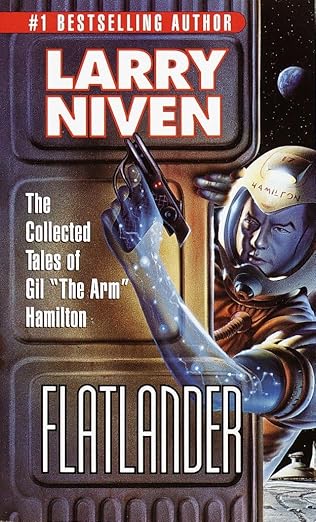
From the Back CoverGil "The Arm" Hamilton was one of the top operatives of ARM, the elite UN plice force. His intuition was unfailingly accurate, his detective skills second to none, and his psychic powers -- esper sense and telekinesis -- were awesome. Now you can read all the classic stories of the legendary ARM operative, collected in one volume for the first time -- plus, an all-new, never-before-published Gil Hamilton adventure!About the AuthorLarry Niven was born in 1938 in Los Angeles, California. In 1956, he entered the California Institute of Technology, only to flunk out a year and a half later after discovering a bookstore jammed with used science-fiction magazines. He graduated with a B.A. in mathematics (minor in psychology) from Washburn University, Kansas, in 1962, and completed one year of graduate work before he dropped out to write. His first published story, “The Coldest Place,” appeared in the December 1964 issue of Worlds of If. He won the Hugo Award for Best Short Story in 1966 for “Neutron Star” and in 1974 for “The Hole Man.” The 1975 Hugo Award for Best Novelette was given to The Borderland of Sol. His novel Ringworld won the 1970 Hugo Award for Best Novel, the 1970 Nebula Award for Best Novel, and the 1972 Ditmar, an Australian award for Best International Science Fiction. Excerpt. © Reprinted by permission. All rights reserved. DEATH BY ECSTASY First came the routine request for a breach of privacy permit. A police officer took down the details and forwarded the request to a clerk, who saw that the tape reached the appropriate civic judge. The judge was reluctant, for privacy is a precious thing in a world of eighteen billion, but in the end he could find no reason to refuse. On November 2, 2123, he granted the permit. The tenant’s rent was two weeks in arrears. If the manager of Monica Apartments had asked for eviction, he would have been refused. But Owen Jennison did not answer his doorbell or his room phone. Nobody could recall seeing him in many weeks. Apparently the manager only wanted to know that he was all right. And so he was allowed to use his passkey, with an officer standing by. And so they found the tenant of 1809. And when they had looked in his wallet, they called me. I was at my desk at ARM Headquarters, making useless notes and wishing it were lunchtime. At this stage the Loren case was all correlate and wait. It involved an organlegging gang apparently run by a single man yet big enough to cover half the North American west coast. We had considerable data on the gang-methods of operation, centers of activity, a few former customers, even a tentative handful of names-but nothing that would give us an excuse to act. So it was a matter of shoving what we had into the computer, watching the few suspected associates of the gang lord Loren, and waiting for a break. The months of waiting were ruining my sense of involvement. My phone buzzed. I put the