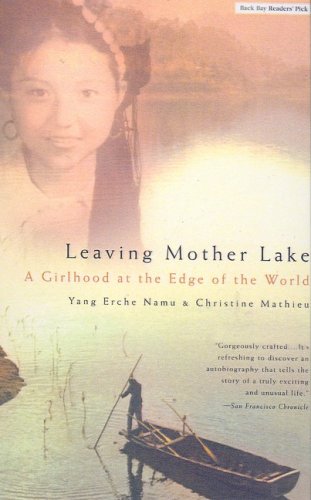
From School Library JournalAdult/High School-In a remote part of China near the Himalayas live the Moso people. Except for a couple of somewhat humorous attempts at assimilation by the revolutionaries, their traditions have remained unchanged. Mothers head the household, and adult children are expected to live with them. Marriage is considered impractical and unnatural. Namu was born in the 1960s to a woman who, in an act of rebellion, started her own house. Growing up, Namu displayed a similar independent streak. When she was discovered by Chinese officials looking for talented singers of ethnic songs, there was no stopping her from engaging with the outside world. Upon admit-tance into the prestigious Shanghai Music Conservatory, Namu asked for Han Chinese (the ethnic majority) roommates. Her choice paid off in improved language skills, although she had to deal with the nastiness of a particularly prejudiced individual. This memoir vividly conveys the bitter cold of mountain nights and strained relationships, along with the warmth of hearth, hospitality, and deep understanding. A fascinating glimpse at a unique culture and the melding of two worlds in a journey to adulthood.Sheila Shoup, Fairfax County Public Library, VACopyright 2003 Reed Business Information, Inc.--This text refers to an out of print or unavailable edition of this title.Review"At last, a memoir that delivers a life worth remembering!... This book enchanted me--the tale and the telling." -- Lynn Freed, author of House of Women--This text refers to an out of print or unavailable edition of this title. From Booklist Namu grew up in Moso country in south China, in a community where people usually live their entire lives in the same village they are born in. In Moso society, women own the houses and are heads of the households. Their adult children take lovers and have children of their own, but they do not leave their mother's house--except for Namu's mother, Latso, who, after almost joining a group of Chinese Communists, instead settled in a nearby village and took a series of lovers. Namu, her third child, was as willful as her mother. As a teen, Namu left home to tour with a musical troupe. Namu and her troupe won contests all over China, but when she returned to Moso country again, she found her village too small and once again made plans to leave--this time without her mother's approval. A fascinating look at a unique culture and a determined, ambitious young woman. (Coauthor Mathieu's afterword provides more insight into Moso culture from an anthropological standpoint.) Kristine HuntleyCopyright © American Library Association. All rights reserved --This text refers to an out of print or unavailable edition of this title. About the Author Yang Erche Namu is a professional singer.Christine Mathieu did her doctoral study on Moso culture and history. She lives in San Francisco and is a professor of anthropology at St. Mary's College of California. --This text refers to an out