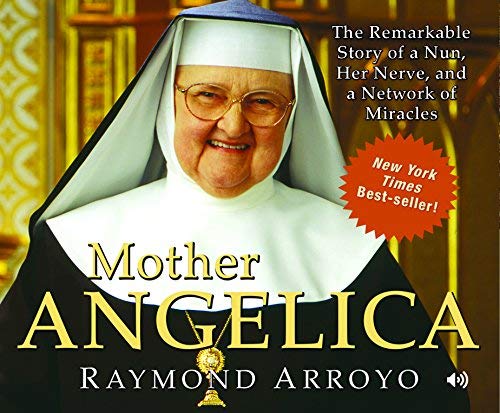
ReviewIn this dramatic page-turner, Raymond Arroyo has captured the life and lessons of Mother Angelica, a woman who may well be the patron saint of CEOs. Buy this book and be inspired! --Lee Iacocca, The Iacocca Foundation, former chief executive officer of the Chrysler CorporationA rattling good story of fear, faith, courage, and bulldog tenacity, beautifully told. The drama of Mother Angelica s life is a powerful reminder that the extraordinary lies just beyond the ordinary if we have eyes to see and ears to hear. --George Weigel, author of Witness to Hope:The Biography of Pope John Paul IIRaymond Arroyo masterfully captures the complexities, humanity, and tenacity of Mother Angelica, who has long been one of my own personal heroes. The founder of the Eternal Word Television Network, Mother Angelica is a woman who dared to dream, to stand up for what she believed in, and whose faith showed that anything is possible. In Arroyo s hands, she becomes someone you wish you had the opportunity to know and love. Read this book and believe. --Nicholas SparksAbout the AuthorRAYMOND ARROYO is the news director and lead anchor at EWTNews. As host of the international newsmagazine, The World Over Live, he is seen in more than 100 million households each week. Arroyo has been a journalist at the Associated Press, The New York Observer, and for the political team of Evans and Novak. Excerpt. © Reprinted by permission. All rights reserved. Mother AngelicaThe Remarkable Story of a Nun, Her Nerve, and a Network of MiraclesBy Raymond ArroyoSaint Anthony Messenger Press and FranciscanCopyright © 2005 Raymond ArroyoAll right reserved.ISBN: 9780867167757Chapter One1One Miserable LifeMother Angelica came into the world overlooked and certainly unwanted, at least by her father. She was born Rita Antoinette Rizzo in the unassuming town of Canton, Ohio, on April 20, 1923.Aside from being the birthplace of President William McKinley, Canton was a forgotten industrial hamlet an hour or so outside of Cleveland. Great scattering streaks of brown smoke billowed from her chimney-dotted skyline, an emblem of the productivity issuing from the little town. Steel was the backbone of Canton: the building block of the new century and the lure for thousands of immigrants. From Canton's mills and production lines spilled the ball bearings, streetcars, bricks, telephones, and pipe fittings that would propel the nation into its greatest period.Apart from the industry, Canton was, as it is today, a pleasant green pasture of rolling hills in the middle of the country, a place to raise a family and avoid the chaos and congestion of city life. That is, unless you lived in the southeast part of town, where Rita Rizzo was born.In 1923, southeast Canton was known as the red-light district, or "the slums," according to some. For the blacks and hordes of Italian immigrants who worked in the Canton mills, the southeast was home. Italians were confined to the district by a combination of illit