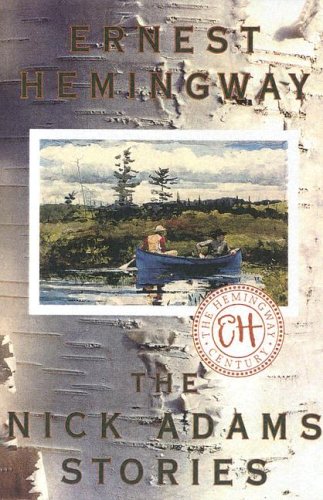
Excerpt. © Reprinted by permission. All rights reserved.The Nick Adams StoriesBy Ernest HemingwayTurtleback Books Distributed by Demco MediaCopyright © 1981 Ernest HemingwayAll right reserved.ISBN: 9780606252836PrefacePreface"Of the place where he had been a boy he had written well enough. As well as he could then." So thought a dying writer in an early version of "The Snows of Kilimanjaro." The writer of course was Hemingway. The place was the Michigan of his boyhood summers, where he remembered himself as Nick Adams. As well as be could write then was very well indeed."Of the place where he had been a boy he had written well enough. As well as he could then." So thought a dying writer in an early version of "The Snows of Kilimanjaro." The writer of course was Hemingway. The place was the Michigan of his boyhood summers, where he remembered himself as Nick Adams. As well as be could write then was very well indeed.Until now, however, the stories involving Nick have always appeared so many to a book, in jumbled sequence. As a result the coherence of his adventures has been obscured, and their impact fragmented. In Men Without Women, Hemingway's second collection of stories, Nick appears first as a soldier in Italy, next as an adolescent in Summit, Illinois, then in turn as a younger boy in Michigan, a married man in Austria, and a soldier back in Italy. Or consider the trouble with "Big Two-Hearted River," one of the best-known Hemingway stories. Placed where it was -- at the end of In Our Time, the first collection -- it puzzled a good many readers. Put where it goes chronologically, following the stories of World War I, its submerged tensions -- the impression that Nick is exorcising some nameless anxiety -- become perfectly understandable. But "A Way You'll Never Be," which precedes "Big Two-Hearted River" in time and explains it, was published eight years and several books after it.Until now, however, the stories involving Nick have always appeared so many to a book, in jumbled sequence. As a result the coherence of his adventures has been obscured, and their impact fragmented. In Men Without Women, Hemingway's second collection of stories, Nick appears first as a soldier in Italy, next as an adolescent in Summit, Illinois, then in turn as a younger boy in Michigan, a married man in Austria, and a soldier back in Italy. Or consider the trouble with "Big Two-Hearted River," one of the best-known Hemingway stories. Placed where it was -- at the end of In Our Time, the first collection -- it puzzled a good many readers. Put where it goes chronologically, following the stories of World War I, its submerged tensions -- the impression that Nick is exorcising some nameless anxiety -- become perfectly understandable. But "A Way You'll Never Be," which precedes "Big Two-Hearted River" in time and explains it, was published eight years and several books after it.Arranged in chronological sequence, the events of Nick's life make up a meaningful narrat