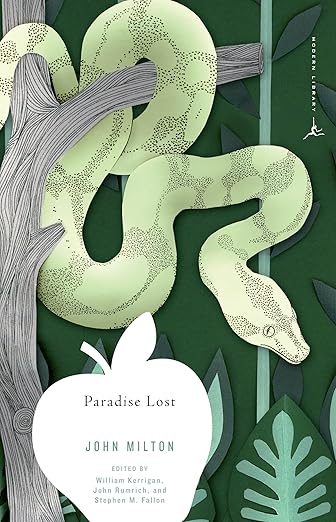
Review“In this landmark edition, teachers will discover a powerful ally in bringing the excitement of Milton’s poetry and prose to new generations of students.”-William C. Dowling, Rutgers University “This magnificent edition gives us everything we need to read Milton intelligently and with fresh perception.”-William H. Pritchard, Amherst CollegeAbout the AuthorJohn Milton (1608-74) was one of England’s greatest poets and a master of polemical prose. He was a private tutor and served as Secretary for Foreign Tongues under Oliver Cromwell. William Kerrigan, former president of the Milton Society of America and recipient of its award for lifetime achievement, is professor emeritus at the University of Massachusetts. John Rumrich is the author of Matter of Glory and Milton Unbound. He is Thaman Professor of English at the University of Texas at Austin. Stephen M. Fallon, author of Milton’s Peculiar Grace and Milton among the Philosophers, is professor of liberal studies and English at the University of Notre Dame. Excerpt. © Reprinted by permission. All rights reserved. PARADISE LOST the printer to the readerCourteous Reader, there was no argument at first intended to the book, but for the satisfaction of many that have desired it, I have procured it, and withal a reason of that which stumbled many others, why the poem rhymes not. S. SimmonsThe VerseThe measure is English heroic verse without rhyme, as that of Homer in Greek, and of Vergil in Latin; rhyme being no necessary adjunct or true ornament of poem or good verse, in longer works especially, but the invention of a barbarous age, to set off wretched matter and lame meter; graced indeed since by the use of some famous modern poets, carried away by custom, but much to their own vexation, hindrance, and constraint to express many things otherwise, and for the most part worse than else they would have expressed them. Not without cause therefore some both Italian and Spanish poets of prime note have rejected rhyme both in longer and shorter works, as have also long since our best English tragedies, as a thing of itself, to all judicious ears, trivial and of no true musical delight; which consists only in apt numbers, fit quantity of syllables, and the sense variously drawn out from one verse into another, not in the jingling sound of like endings, a fault avoided by the learned ancients both in poetry and all good oratory. 1. The defense of blank verse and the prose arguments summarizing each book “procured” by Milton’s printer, Samuel Simmons, were inserted in bound copies of the first edition beginning in 1668, with this brief note.This neglect then of rhyme so little is to be taken for a defect, though it may seem so perhaps to vulgar readers, that it rather is to be esteemed an example set, the first in English, of ancient liberty recovered to heroic poem from the troublesome and modern bondage of rhyming.Book I The ArgumentThis first book proposes, first in brief, the