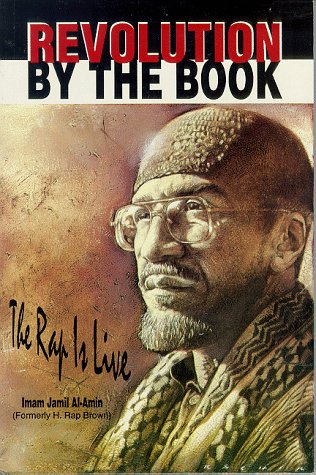
Review"A valuable text for new Muslims and an excellent introduction to the fundamental teachings of Islam for non-Muslims." -- John Lewis, Baltimore City Paper. . . absolutely scintillating expression of controversial ideas by one so gifted in language to become known as "Rap" . . . Al-Amin is still using his gift . . . to call the people to action. -- The Black Collegian, Jan.-Feb., 1994. . . stresses that the [real] revolution begins within every individual [upon recognizing] the greatness of Allah as the Creator and Lord and [submitting] to His natural laws. . . universal, timeless truth which frees the mind and allows the soul to draw near its Creator. -- Muslim Journal, Sept. 3, 1993Al-Amin thoroughly explains the principles of Islam and its role in the struggle against oppression . . . Many of the young African-Americans who are struggling for equality, idolize Al-Amin and choose to raise the consciousness of people through what is called rap music...reminiscent of his former nickname "Rap"...earned on the streets because of his mastery of the Black vernacular. --South Carolina Black Media Group, Sept. 2, 1993About the AuthorBrown, the youngest of three children, was born in Baton Rouge, Louisiana, in 1943. His father worked as a laborer for Esso Standard Oil; his mother taught children at an orphanage and also worked as a maid. As a youth, the 6'5" Brown was an excellent athlete, excelling in basketball and football. The name given to him by his parents was Hubert Geroid Brown. The street named him Rap. He had a scathing dexterity with the language, combining profound intellect with blunt coarseness. "We played the Dozens, like white folks play Scrabble...a mean game, where you try to totally destroy somebody else with words." Influenced by his readings of many writers committed to the struggle of Blacks for freedom, the nineteen year-old H. Rap Brown found the environment around Howard University in Washington, D.C. inspiring and motivating. He had attended Southern University for a while but spent summers with his brother who attended Howard, and by 1964, Brown had moved there and become politically involved in SNCC, the Student Nonviolent Coordinating Committee. Under the leadership of Stokely Carmichael, SNCC, in 1966, rejected its earlier policy of nonviolence. It adopted a strong anti-white direction, dissuading whites from participating in the organization and disdaining their support. As chairman of SNCC, Carmichael criticized many of the tactics of the civil rights movement and demanded "Black Power" for his people. Brown's boldness and commitment were soon recognized by the SNCC leadership. He took on the political establishment with fearless verbal assaults that moved and inspired audiences. He helped break the spell which years of slavery and segregation had cast over the African-American masses who held white leaders in awe and reverence. In May 1967, at the age of 23, he was elected chairman of SNCC, succeeding Carmichael. N