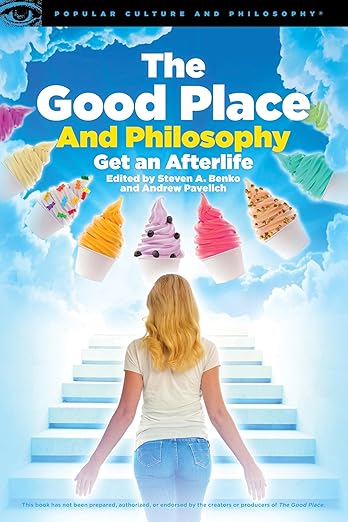
The Good Place and Philosophy
Paperback - September 17, 2019
By Steven A. Benko, Andrew Pavelich
ISBN:
0812694767
Publisher:
Open Court
Year:
2019
Pages:
256
About This Book
The Good Place is a fantasy-comedy TV show about the afterlife. Eleanor dies and finds herself in the Good Place, which she understands must be mistake, since she has been anything but good. In the surprise twist ending to Season One, it is revealed that this is really the Bad Place, but the demon who planned it was frustrated, because the characters didn’t torture each other mentally as planned, but managed to learn how to live together. In The Good Place and Philosophy, twenty-one philosophers analyze different aspects of the ethical and metaphysical issues raised in the show, including: ● Indefinitely long punishment can only be justified as a method of ultimately improving vicious characters, not as retribution. ● Can individuals retain their identity after hundreds of reboots? ● Comparing Hinduism with The Good Place, we can conclude that Hinduism gets things five percent correct. ● Looking at all the events in the show, it follows that humans don’t have free will, and so people are being punished and rewarded unjustly. ● Is it a problem that the show depicts torture as hilarious? This problem can be resolved by considering the limited perspective of humans, compared with the eternal perspective of the demons. ● The Good Place implies that even demons can develop morally. ● The only way to explain how the characters remain the same people after death is to suppose that their actual bodies are transported to the afterlife. ● Since Chidi knows all the moral theories but can never decide what to do, it must follow that there is something missing in all these theories. ● The show depicts an afterlife which is bureaucratic, therefore unchangeable, therefore deeply unjust. ● Eleanor acts on instinct, without thinking, whereas Chidi tries to think everything through and never gets around to acting; together these two characters can truly act morally. ● The Good Place shows us that authenticity means living for others. ● The Good Place is based on Sartre’s play No Exit, with its famous line “Hell is other people,” but in fact both No Exit and The Good Place inform us that human relationships can redeem us. ● In The Good Place, everything the humans do is impermanent since it can be rebooted, so humans cannot accomplish anything good. ● Kant’s moral precepts are supposed to be universal, but The Good Place shows us it can be right to lie to demons. ● The show raises the question whether we can ever be good except by being part of a virtuous community.