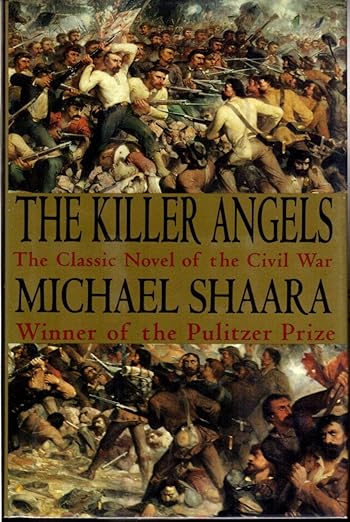
Review“The best and most realistic historical novel about war I have ever read.”-GENERAL H. NORMAN SCHWARZKOPF“My favorite historical novel . . . A superb re-creation of the Battle of Gettysburg, but its real importance is its insight into what the war was about, and what it meant.”-JAMES M. MCPHERSON Author of Battle Cry of Freedom“Remarkable . . . A book that changed my life . . . I had never visited Gettysburg, knew almost nothing about that battle before I read the book, but here it all came alive.”-KEN BURNS Filmmaker, The Civil War“Shaara carries [the reader] swiftly and dramatically to a climax as exciting as if it were being heard for the first time.”-The Seattle TimesFrom the Inside FlapA reissue of a Pulitzer prize-winning classic, and now the major motion picture GETTYSBURG. As a result of these acclamations, this book is considered one of the greatest novels written on the Civil War. About the Author Michael Shaara was born in Jersey City in 1929 and graduated from Rutgers University in 1951. His early science fiction short stories were published in Galaxy magazine in 1952. He later began writing other works of fiction and published more than seventy short stories in many magazines, including The Saturday Evening Post, Cosmopolitan, and Redbook. His first novel, The Broken Place, was published in 1968. But it was a simple family vacation to Gettysburg, Pennsylvania, in 1966 that gave him the inspiration for his greatest achievement, the Pulitzer Prize-winning novel The Killer Angels, published in 1974. Michael Shaara went on to write two more novels, The Noah Conspiracy and For Love of the Game, which was published posthumously after his death in 1988. Excerpt. © Reprinted by permission. All rights reserved. 1. THE SPYHe rode into the dark of the woods and dismounted. He crawled upward on his belly over cool rocks out into the sunlight, and suddenly he was in the open and he could see for miles, and there was the whole vast army below him, filling the valley like a smoking river. It came out of a blue rainstorm in the east and overflowed the narrow valley road, coiling along a stream, narrowing and choking at a white bridge, fading out into the yellowish dust of June but still visible on the farther road beyond the blue hills, spiked with flags and guidons like a great chopped bristly snake, the snake ending headless in a blue wall of summer rain.The spy tucked himself behind a boulder and began counting flags. Must be twenty thousand men, visible all at once. Two whole Union Corps. He could make out the familiar black hats of the Iron Brigade, troops belonging to John Reynold’s First Corps. He looked at his watch, noted the time. They were coming very fast. The Army of the Potomac had never moved this fast. The day was murderously hot and there was no wind and the dust hung above the army like a yellow veil. He thought: there’ll be some of them die of the heat today. But they are coming faster than they e