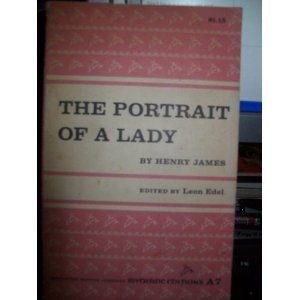
Excerpt. © Reprinted by permission. All rights reserved.From Gabriel Brownstein's Introduction to The Portrait of a LadyThe Portrait of a Lady is often discussed as a novel of manners, a sociological study of the contrasts in mores and styles of Americans and Europeans. It's also described as a psychological novel, charting the complex interplay between the minds of its major characters and exploring relentlessly and finely the consciousness of its heroine, Isabel. But these characterizations, while not entirely mistaken, obscure a central characteristic of the novel: The Portrait of a Lady is a fairy tale, or as James put it in the 1906 preface, a "fable". With whatever authority he presents the psyches and social milieus of his Europeans and Americans and Europeanized Americans, and however carefully observed the locales-and the authority and care are absolute-the project of The Portrait of a Lady is about as close to a work of social science as it is to a conventional potboiler. Americans and Europeans, in the novel, are types: As Leon Edel, James's great biographer and critic, has it, "In James' fiction, Americans are often presented as if they still possess the innocence of Eden;" and furthermore, "it is striking how often the adjective 'corrupt' precedes the word 'Europe'" (article in Scribner's American Writers, Vol. 2, pp. 320-323). As they appear in The Portrait of a Lady, these representatives of the old and new worlds are rendered vividly, and they may feel to the reader momentarily real, but in the end they are figures in a novelist's dreams and meditations; they are as conceptual as they are concrete. Similarly, "American girl" is not a category of mind or state of consciousness; it is a kind of representational ideal. In the author's terms, the phrase "American girl" is almost redundant. Both the words conjure innocence and (in their way) beauty. Both words also auger doom. If, as Edel argues, America is an Eden, then a fall will come, as surely as a girl will become a woman or die. The phrase "American girl" also carries with it a hint of contradiction, a fight between the two words: While an American is liberated, a girl is subject to all kinds of boundaries and limits. "American girl," then, is a phrase that conjures a story, a cheerful two words that together gather storm clouds. American girls are doubly doomed among the limits of European society; an American girl going to Europe is a pure white lamb bound to be ruined. The Portrait of a Lady is often discussed as a novel of manners, a sociological study of the contrasts in mores and styles of Americans and Europeans. It's also described as a psychological novel, charting the complex interplay between the minds of its major characters and exploring relentlessly and finely the consciousness of its heroine, Isabel. But these characterizations, while not entirely mistaken, obscure a central characteristic of the novel: The Portrait of a Lady is a fairy tale, or as James put