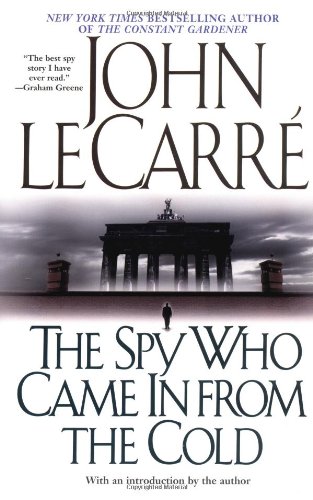
ReviewGraham Greene The best spy story I have ever read.Newsweek Le Carré is simply the world's greatest fictional spymaster.Vanity Fair Le Carré is one of the best novelists -- of any kind -- we have.Daphne du Maurier First-rate and tremendously exciting.J. B. Priestley Superbly constructed, with an atmosphere of chilly hell.The Sunday Times (U.K.) A topical and terrible story...he can communicate emotion, from sweating fear to despairing love, with terse and compassionate conviction. Above all, he can tell a tale. Formidable equipment for a rare and disturbing writer.About the AuthorJohn le CarrÉ was born in 1931. His third novel, The Spy Who Came in From the Cold, secured him a worldwide reputation, which was consolidated by the acclaim for his trilogy: Tinker, Tailor, Soldier, Spy; The Honorable Schoolboy, and Smiley's People. His novels include The Little Drummer Girl, A Perfect Spy, The Russia House, Our Game, The Taileor of Panama, and Single & Single. John le CarrÉ lives in Cornwall. Excerpt. © Reprinted by permission. All rights reserved. Chapter One: Checkpoint The American handed Leamas another cup of coffee and said, "Why don't you go back and sleep? We can ring you if he shows up." Leamas said nothing, just stared through the window of the checkpoint, along the empty street. "You can't wait for ever, sir. Maybe he'll come some other time. We can have the polizei contact the Agency: you can be back here in twenty minutes." "No," said Leamas, "it's nearly dark now." "But you can't wait for ever; he's nine hours over schedule." "If you want to go, go. You've been very good," Leamas added. "I'll tell Kramer you've been damn' good." "But how long will you wait?" "Until he comes." Leamas walked to the observation window and stood between the two motionless policemen. Their binoculars were trained on the Eastern checkpoint. "He's waiting for the dark," Leamas muttered. "I know he is." "This morning you said he'd come across with the workmen." Leamas turned on him. "Agents aren't aeroplanes. They don't have schedules. He's blown, he's on the run, he's frightened. Mundt's after him, now, at this moment. He's only got one chance. Let him choose his time." The younger man hesitated, wanting to go and not finding the moment. A bell rang inside the hut. They waited, suddenly alert. A policeman said in German, "Black Opel Rekord, Federal registration." "He can't see that far in the dusk, he's guessing," the American whispered and then he added: "How did Mundt know?" "Shut up," said Leamas from the window. One of the policemen left the hut and walked to the sandbag emplacement two feet short of the white demarcation which lay across the road like the base line of a tennis court. The other waited until his companion was crouched behind the telescope in the emplacement, then put down his binoculars, took his black helmet from the peg by the door, and carefully adjusted it on his head. Somewhere high above the checkpoint the arclights sprang to l