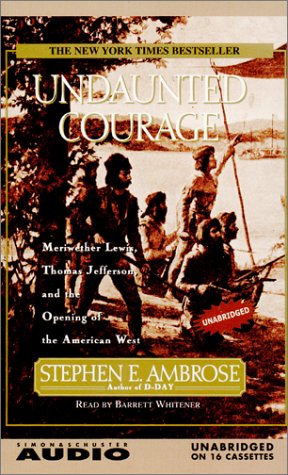
ReviewKen Burns Stephen Ambrose is that rare breed: a historian with true passion for his subject. Here he takes one of the great, but also one of the most superficially considered, stories in American history and breathes fresh life into it. Lewis comes alive as we've never known him. -- ReviewAbout the AuthorDr. Stephen Ambrose was a renowned historian and acclaimed author of more than thirty books. Among his New York Times bestsellers are Nothing Like It in the World, Citizen Soldiers, Band of Brothers, D-Day - June 6, 1944, and Undaunted Courage. Dr. Ambrose was a retired Boyd Professor of History at the University of New Orleans and a contributing editor for the Quarterly Journal of Military History. He also participated in numerous national television programs, including shows appearing on the History Channel and National Geographic. Excerpt. © Reprinted by permission. All rights reserved. Chapter 1Youth 1774-1792From the west-facing window of the room in which Meriwether Lewis was born on August 18, 1774, one could look out at Rockfish Gap, in the Blue Ridge Mountains, an opening to the West that invited exploration. The Virginia Piedmont of 1774 was not the frontier -- that had extended beyond the Allegheny chain of mountains, and a cultured plantation life was nearly a generation old -- but it wasn't far removed. Traces of the old buffalo trail that led up Rockfish River to the Gap still remained. Deer were exceedingly plentiful, black bear common. An exterminating war was being waged against wolves. Beaver were on every stream. Flocks of turkeys thronged the woods. In the fall and spring, ducks and geese darkened the rivers.Lewis was born in a place where the West invited exploration but the East could provide education and knowledge, where the hunting was magnificent but plantation society provided refinement and enlightenment, where he could learn wilderness skills while sharpening his wits about such matters as surveying, politics, natural history, and geography.The West was very much on Virginians' minds in 1774, even though the big news that year was the Boston Tea Party, the introduction of resolutions in the House of Burgesses in support of Massachusetts, the dissolution of the Burgesses by the Royal Governor Lord Dunmore, and a subsequent meeting at Raleigh Tavern of the dissolved Burgesses, whose Committee of Correspondence sent out letters calling for a general congress of the American colonies. In September, the First Continental Congress met in Philadelphia, and revolution was under way.Lord Dunmore was a villain in the eyes of the revolutionaries. He was eventually forced to flee Virginia and take up residence on a British warship. But in January 1774, he had done Virginia a big favor by organizing an offensive into the Ohio country by Virginia militia. The Virginians goaded Shawnee, Ottawa, and other tribes into what became Lord Dunmore's War, which ended with the Indians defeated. They ceded hunting rights in Kentucky to