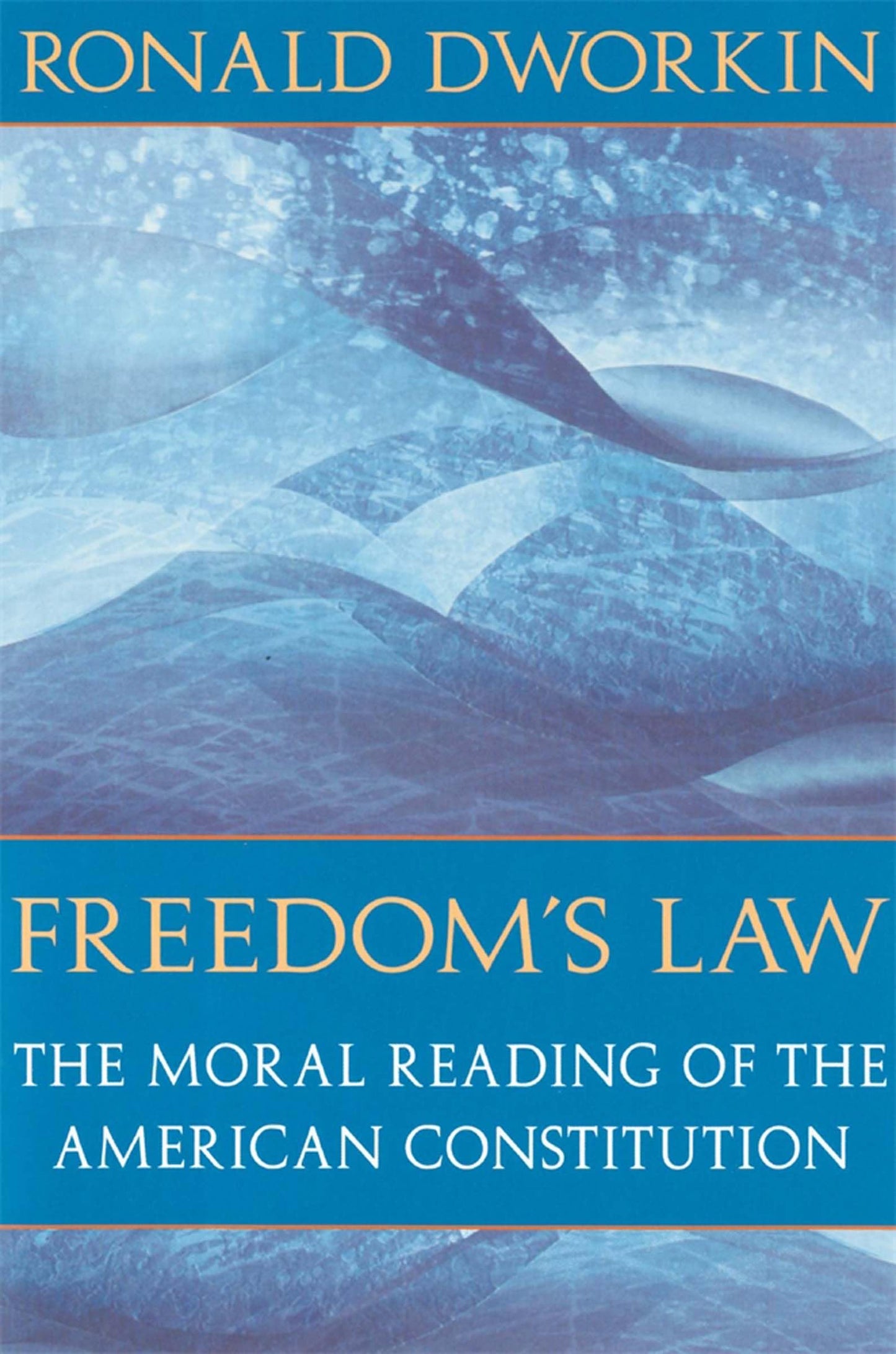
Freedom's Law: The Moral Reading of the American Constitution
Freedom's Law: The Moral Reading of the American Constitution
Couldn't load pickup availability
Author: Dworkin, Ronald
Brand: Harvard University Press
Features:
- Used Book in Good Condition
Number Of Pages: 414
EAN: 9780674319288
Release Date: 25-04-1997
Package Dimensions: 9.1 x 6.1 x 1.2 inches
Languages: English
Binding: Paperback
Details: Ronald Dworkin argues that Americans have been systematically misled about what their Constitution is, and how judges decide what it means. The Constitution, he observes, grants individual rights in extremely abstract terms. The First Amendment prohibits the passing of laws that "abridge the freedom of speech"; the Fifth Amendment insists on "due process of law"; and the Fourteenth Amendment demands "equal protection of the laws" for all persons. What does that abstract language mean when it is applied to the political controversies that divide Americans--about affirmative action and racial justice, abortion, euthanasia, capital punishment, censorship, pornography, and homosexuality, for example? Judges, and ultimately the justices of the Supreme Court, must decide for everyone, and that gives them great power. How should they decide? Dworkin defends a particular answer to that question, which he calls the moral reading of the Constitution. He argues that the Bill of Rights must be understood as setting out general moral principles about liberty and equality and dignity, and that private citizens, lawyers, and finally judges must interpret and apply those general principles by posing and trying to answer more concrete moral questions. Is freedom to choose abortion really a basic moral right and would curtailing that right be a deep injustice, for example? Why? In the detailed discussions of individual constitutional issues that form the bulk of the book, Dworkin shows that our judges do decide hard constitutional cases by posing and answering such concrete moral questions. Indeed he shows that that is the only way they can decide those cases. But most judges--and most politicians and most law professors--pretend otherwise. They say that judges must never treat constitutional issues as moral issues because that would be undemocratic--it would mean that judges were substituting their own moral convictions for those
Share